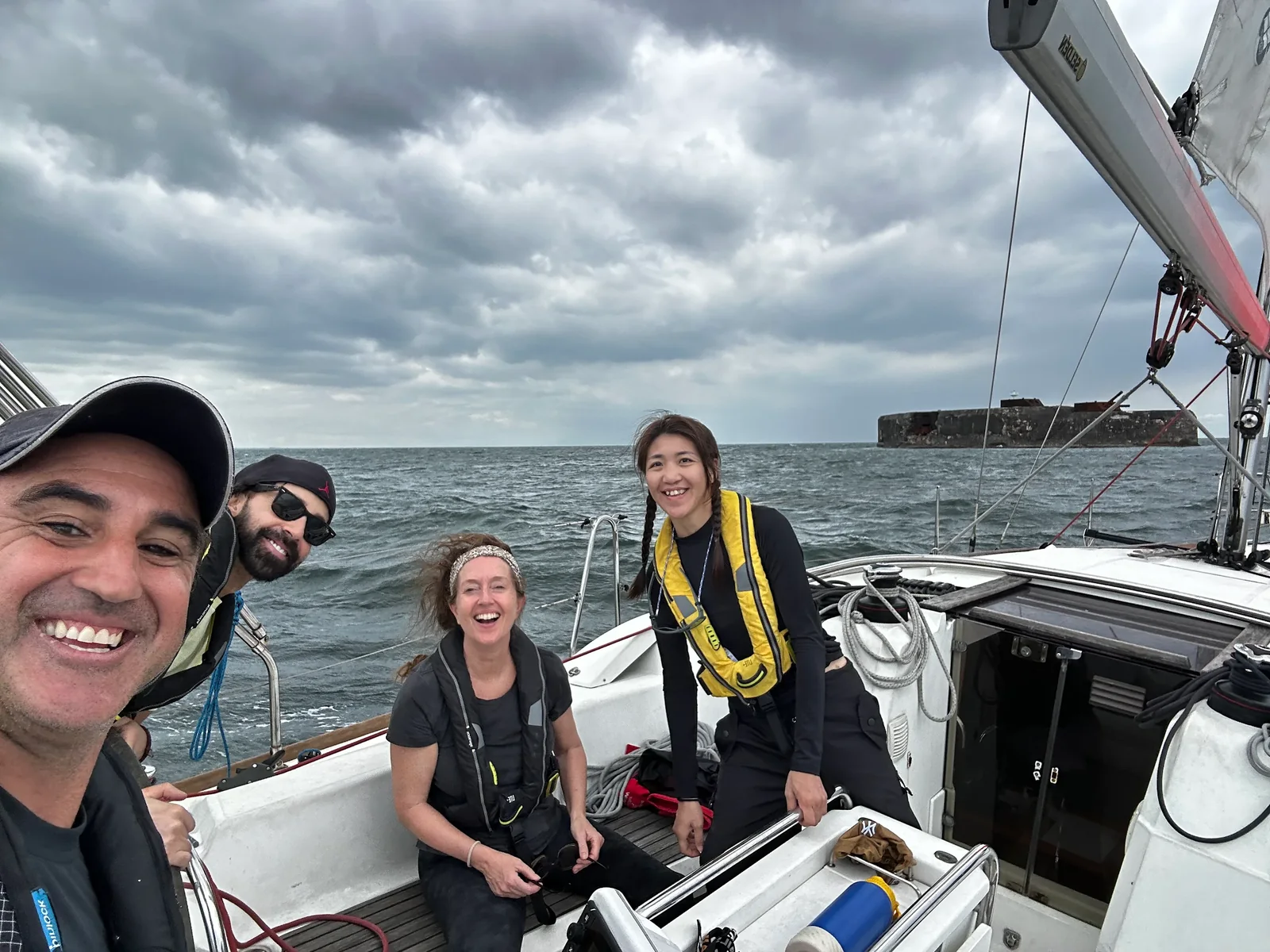
Boarding and briefing
Expect to arrive 15 to 30 minutes before departure. Crew will show you aboard, stow your bag, and run a short safety briefing: where the lifejackets are, where not to stand, how the boom moves, and what to do if you feel unwell.
This is the moment to mention anything relevant — mobility, motion sickness, non-swimmers, small children — so the crew can seat you well and keep an eye out.
Leaving the berth and getting the sails up
Boats usually motor out of the marina, then turn into the wind to hoist. There is a short burst of activity and noise, then the engine stops and the boat settles onto a heel. That lean is normal and designed in, but it surprises first-timers more than anything else on the trip.
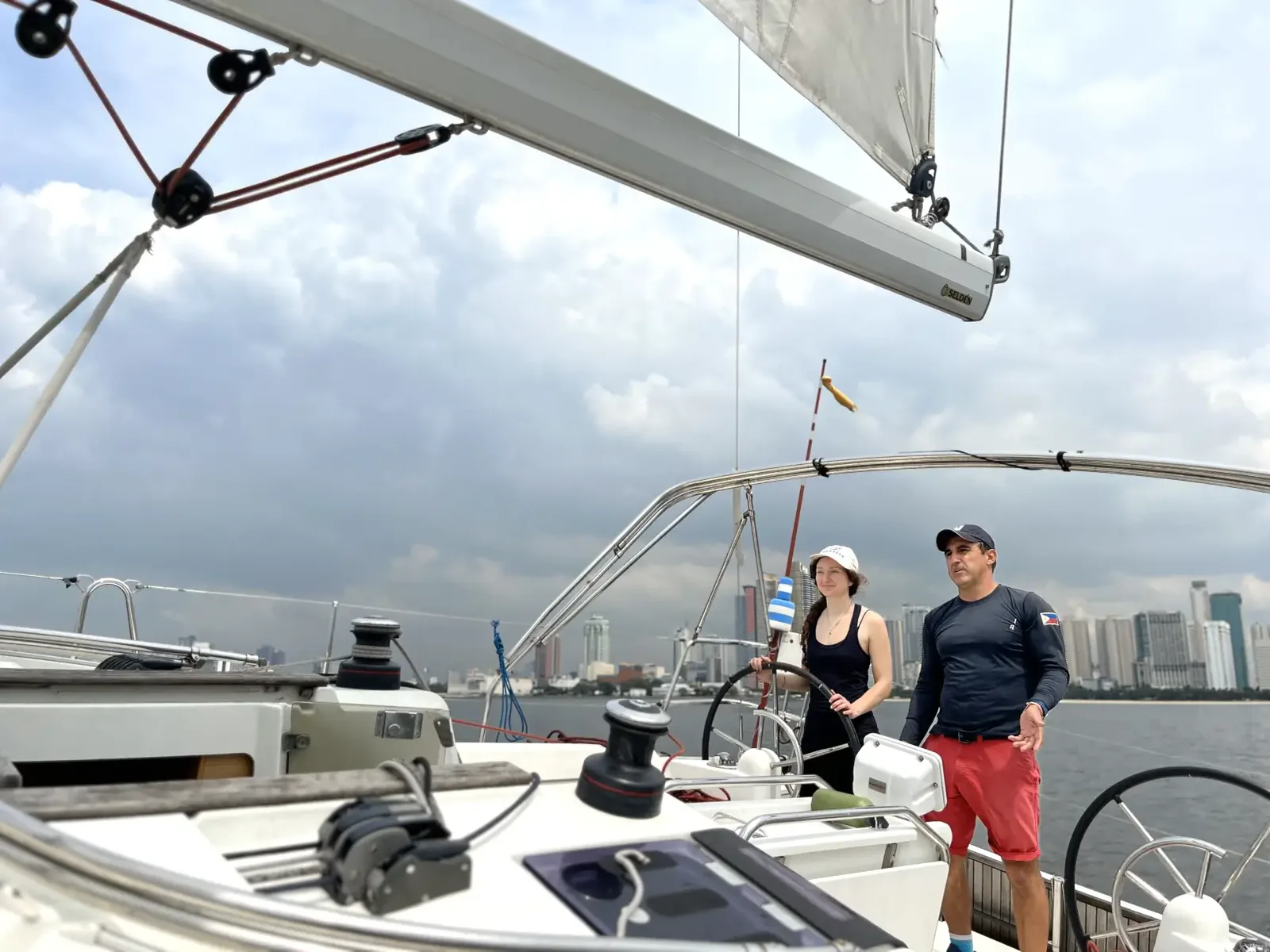
Most operators welcome guests helping to trim a sheet or take the helm for a while; none require it. Say yes or stay seated — both are fine.
Golden hour and the photos worth taking
The best light starts roughly 30 minutes before sunset and continues into the afterglow once the sun is gone — the phase most people leave too early to see. Shoot into the light for silhouettes of sails and rigging, and away from it for warm colour on faces and the coastline.
Keep the phone in a strap or pouch. Wet decks and a bit of heel account for most overboard phones.
- Pre-sunset: sails backlit, long shadows on the water
- Sunset: silhouettes, horizon shots, minimal zoom
- Afterglow: soft colour, harbour lights coming on
The run home in the dark
After sunset the temperature drops and the wind often feels stronger, which is why a jacket in your bag matters more than sunscreen by that point. Navigation lights go on, conversation gets quieter, and the boat is usually back on the engine for the approach to the berth.
Return time is typically 30 to 60 minutes after sunset depending on the route, so plan dinner reservations with a buffer.
Operators: set expectations and your reviews look after themselves
Nearly every mismatched review on a day-sail operator comes from an expectation nobody set: guests who did not know the boat heels, did not bring a layer, or thought swimming was included.
A short, honest "what happens on this trip" section on each booking page fixes that, and it doubles as the content that ranks for these informational searches long before the visitor is ready to pay.
Arrive early, expect a briefing and a heel, stay aboard for the afterglow, and pack a layer for the ride home — and publish that timeline on your trip page if you run the boat.
Turn trip questions into bookings
We build boat and charter booking sites where the trip timeline, inclusions, and live availability sit on one page — so guests book instead of asking.
See our boat booking website design service