Websites that
fill every course
Sailing schools and yacht clubs lose students when course information is buried, booking takes five emails, and the mobile experience breaks. We build sailing school websites that make enrolment, scheduling, and payment effortless.
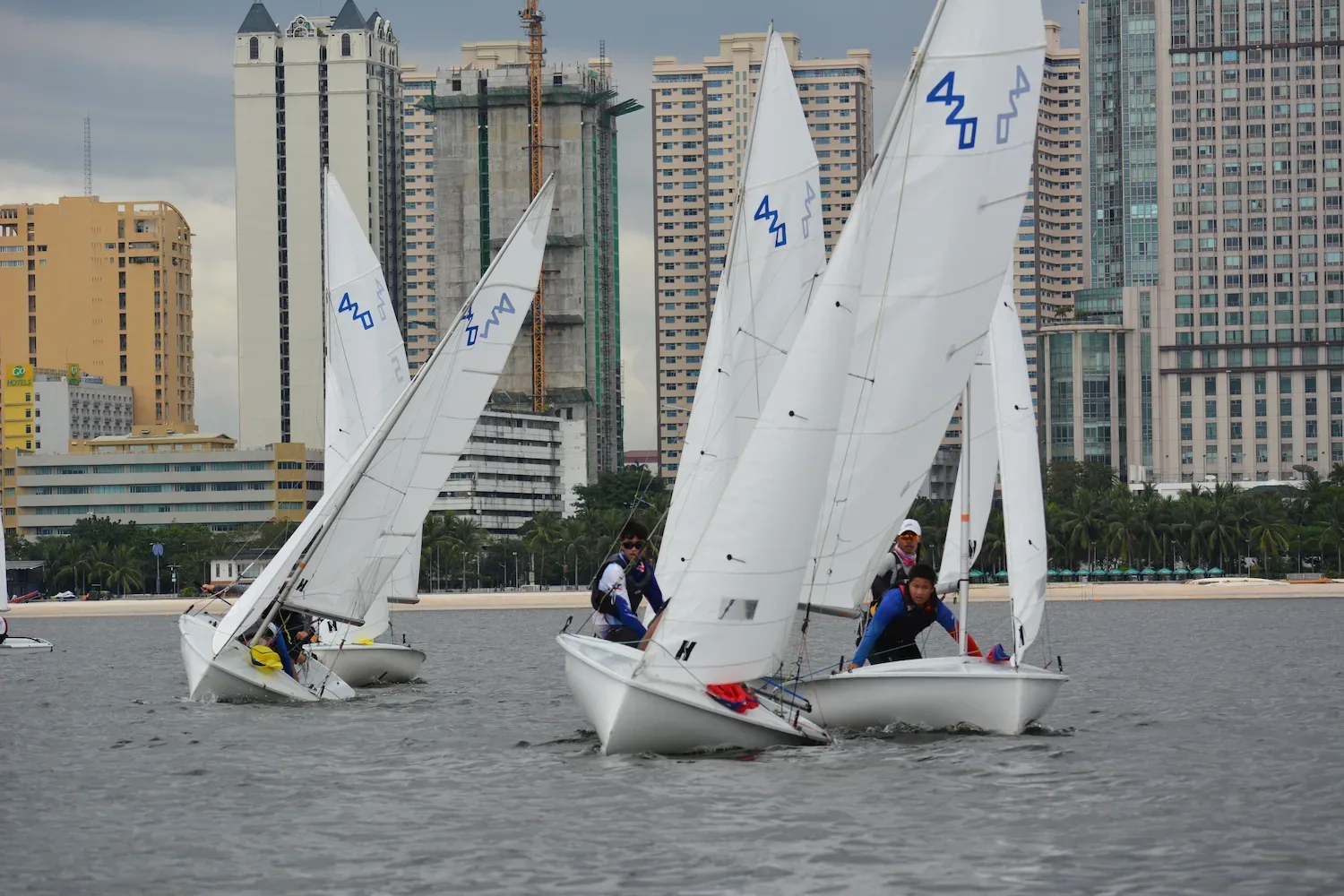
Course pages that fill berths
We build sailing school sites the way a school teaches: clear progression, honest prerequisites, visible instructor credentials and a booking step that never asks twice.
The Philippine School of Yachting build pairs the course catalogue with a bespoke scheduling and payment engine.
Sailing school website case studySailing school
web design, term by term
Six searches bring schools to this page. Here is what each one is really asking, and where on this page it is answered — so you can skip to the part that matters to you.
Sailing school website design
A school owner comparing agencies. They want to see course pages, booking, and pricing before they enquire.
Deliverables, three package ranges, and a four-phase build process — all on this page.
Sailing academy website design
Larger academies with multiple levels, youth squads, and term intakes across more than one base.
The Academy and Federation tiers cover multi-course, multi-location and instructor portals.
Learn to sail website / booking system
Schools whose enrolments still run through email and Messenger threads and want a self-serve flow.
Session and term booking, waitlists, deposits, and instalment plans built into the course page.
RYA training centre website
Recognised centres that need certification pathways, prerequisites and syllabus documents structured properly.
Certification frameworks and course structured data, as built for Philippine School of Yachting.
Sailing lessons near me
The student-side search your site has to win. Local, mobile, and usually within a week of the class.
Location pages, Google Business Profile setup, and course schema so dates show in search.
Sailing school SEO
Schools with a site that looks fine but does not rank, and no visibility into where enquiries come from.
Search foundations ship with every build, with analytics per programme and per location.
What you get
Every sailing school website is built around four conversion layers: course discovery, class booking, payment, and the search foundations that keep the waitlist full.
Course & Certification Pages
Course pages that answer every student question before they ask it, from prerequisites and schedule to certification path and next steps.
- Structured course catalogue by level and age group
- RYA, ASA, and national certification frameworks
- Prerequisites, equipment, and schedule breakdown
- Instructor credentials and class capacity
- Downloadable syllabus and waiver handling
Class Booking & Scheduling
Parents and adult students can book a course, reserve a trial sail, or register a child for a youth programme without phoning the office.
- Session-based and term-based booking
- Waitlists and automatic capacity alerts
- Private lesson scheduling with instructor matching
- Trial sail and open-day registration
- Calendar feeds and automated reminders
Deposits & Payments
Take course deposits, payment plans, and membership fees in one secure flow, with rules that match your school.
- Course deposit or full payment options
- Instalment plans for multi-week courses
- Membership and family plan renewals
- Gift certificates and voucher sales
- Cancellation and refund policies in-flow
Conversion & Search Foundations
A school site only works if local families and aspiring sailors can find it, trust it, and sign up on a phone.
- Mobile-first registration flow with minimal friction
- Local SEO for nearby sailing lesson searches
- Event, course, and organisation structured data
- Parent testimonials and student success stories
- Analytics and funnel tracking per programme
How we build
school sites
A four-phase build designed around your term calendar, booking rules, and the families and students you want to reach.
Discovery
We map your course calendar, certification levels, booking rules, and how families and students currently find you.
Design
We wireframe the course flow, booking journey, and mobile experience to make enrolment feel effortless.
Build
Your site is built on a reliable stack, with booking forms, payments, and SEO foundations integrated from the start.
Launch & Train
We launch, run your team through the CMS, and set up reporting so you can see which programmes fill fastest.
Sailing school
website packages
Indicative ranges in US dollars (USD) for design, build and launch. Final scope is confirmed after a short discovery call — no charge, no obligation.
Prices switch to your region's currency and price level. Conversion rates last reviewed August 2026; your quote is confirmed in writing after the discovery call.
Invoiced in US dollars by card or international transfer, with a 40% start payment and the balance staged against delivery milestones.
Start
A small sailing school or yacht club with a few courses and simple enquiries.
- Up to 6 pages, mobile-first design
- Course catalogue with clear structure
- Contact and enrolment enquiry forms
- Google Business and local SEO setup
- Analytics and goal tracking
Academy
Most chosenSailing schools with multiple course levels, youth programmes, and term bookings.
- Custom course, instructor and venue templates
- Online booking with deposits and waitlists
- Membership and family plan registration
- Event calendar and automated reminders
- Structured data and review integration
- Conversion and drop-off tracking
Federation
National schools, federations, or multi-location academies with custom workflows.
- Multi-location course and instructor directory
- Custom certification and progress tracking
- Instructor portal and schedule management
- National CRM and student lifecycle tools
- Multi-language and multi-currency rollout
- Ongoing retainer for growth and support
Local search,
bay by bay
Students search by the place they want to sail from, not by country. Every school site we build names its city, bay or marina in the headings, and each teaching base gets its own page instead of sharing one.
Philippines
Home base. Manila Bay, Subic Bay, Batangas and the Visayas charter belt — mobile-first pages, Messenger and Viber contact next to the form, and seasonal demand around the amihan months.
Philippine sailing clubs guideUnited Kingdom
RYA recognised training centres and club-run schools competing on town-level searches, where membership and course booking are still buried in PDFs.
UK sailing clubs guideEurope & the Mediterranean
Multi-language schools and charter-linked academies that need currency, language and season handling in one booking flow.
Club location guidesRemote worldwide
Digital Sailors works remotely with schools in any timezone. Discovery, design reviews and CMS training all run over calls and shared documents.
Book a callDigital Sailors is based in the Philippines and works remotely worldwide. We do not list offices we do not have — if your market is not above, ask and we will tell you honestly whether we are the right fit.
Related work
Philippine School of Yachting
RYA course and charter pages with enquiry and booking flows built into every course page.
View case studyConcept BuildBoat booking platform blueprint
The same booking and scheduling patterns we use for sailing schools, applied to a charter platform build.
Read the blueprintSchools and clubs we build for
Every client below is live work you can open — including the course booking engine we built for a working sailing school.
 Philippine School of Yachting
Custom WordPress theme, yacht SEO programme and a bespoke course-and-charter booking engine with scheduling, instructor management and online payments — for an RYA Training Centre.
- Philippine Sailing Association
Full revamp for the national governing body of sailing: mobile-first redesign, CDN and security hardening, regatta registration CRO and a schema-backed content programme.
 Sailing.ph
Community platform for Philippine sailing — regatta listings, racing results, club and venue directories, piloting with 8–10 partner clubs.
- Digital Sailors NGO
Sailing-industry content hubs: national events calendar, club directory and racing orientation guides, built on the same stack we ship to charter and rental operators.
 Superyacht Academy In Asia and the Pacific Corp. (SAAP Corp)
Website redesign and booking system for the Philippines' pioneer superyacht training academy — IYT-accredited and MCA-recognised. Currently in development: brand, structure and booking enquiry flow designed before build.
Accredited / affiliatedMarks belong to their owners: International Yacht Training Worldwide, Superyacht UK, British Marine, International Superyacht Society, Scuba Schools International, KJCM Maritime, Eurasian Maritime Corp.









We publish client quotes only once they are written and approved by the client, so what you see above is live, verifiable work you can open and inspect yourself.
Book your sailing school discovery call
Pick a 30-minute slot that suits you. We confirm by email straight away with everything to bring to the call.
- 30 minutes, straight to your enrolment funnel
- We map courses, seasons and payments live
- You leave with a scope and a budget range
30 minutes
Google Meet or WhatsApp video
Times shown in Eastern Time (EST/EDT)
1. Select a time
Mon–Fri · 9:00–17:00 ETLoading available times…
Sailing school website FAQ
What is sailing school website design?
It is the design and development of a website built around the way a sailing school operates: course catalogues, class schedules, online booking, deposits, and student communication. The goal is to turn a visitor into a registered student without extra phone calls or back-and-forth emails.
Do you integrate with existing class booking systems?
Yes. If you already use a booking or CRM system, we can integrate it or embed it cleanly. If your rules are unique, we can build a custom booking flow that matches your term calendar, capacity limits, and instructor assignments.
How long does a sailing school website take?
A Start site typically runs 3–4 weeks. Academy builds are usually 6–10 weeks depending on booking complexity and number of courses. Federation and multi-location projects are scoped in phases.
Can you help with local SEO for sailing lessons?
Yes. Local SEO is a core part of the package: service-area pages, Google Business Profile optimisation, course structured data, and location-specific content that helps you rank for terms like 'sailing lessons near me'.
Do you work with sailing schools outside the Philippines?
Yes. Digital Sailors is based in the Philippines and works remotely with schools, clubs and training centres worldwide. Discovery calls, design reviews and CMS training are all run online, and we schedule sessions around your timezone.
How do you target the city or bay we teach from?
Each base gets its own page naming the city, bay or marina in the heading, with directions, the fleet kept there, its own course dates, and its own contact. Two locations sharing one page compete with each other in search, so we split them and link them from a single schools overview.
What local SEO work happens after launch?
We set up or clean the Google Business Profile, keep name, address and phone details identical across the site and profile, add course and event structured data so dates can appear in search, and set up review prompts for parents and students. Ongoing local work is available as a retainer.
Will the site grow with our school?
Yes. Every build is designed to add new courses, locations, and instructors over time, and we offer managed packages for ongoing updates, security, and performance.
Can students pay a deposit or the full course fee online?
Yes. We can take a holding deposit, a per-seat fee, or the full course price at the point of booking, with the balance invoiced later. Payments run through a gateway you already hold an account with, so funds land in your bank rather than ours, and every booking confirmation states what was paid and what is still owed.
How do you handle course capacity, waitlists and cancellations?
Each course date carries its own seat count, so a session closes itself once the boat or classroom is full and the next date is offered automatically. Full dates can collect waitlist entries instead of turning students away, and cancelled or weather-postponed sessions can be marked so the date drops off the public schedule and registered students are emailed.
Can our team update course dates and prices without a developer?
Yes. Courses, dates, prices, instructors, and page copy all sit in the CMS, and we hand over a short recorded walkthrough plus a live training session at launch. Structural or new-feature work comes back to us; day-to-day schedule and price edits are yours.
Do you add waivers, medical forms and parental consent to the booking flow?
Yes. Liability waivers, swim ability and medical declarations, emergency contacts, and parent or guardian consent for junior sailors can be collected as part of registration and stored with the booking, so instructors have them before the student reaches the pontoon. We follow your school's wording — we don't draft legal text for you.
Can you show our accreditations and instructor qualifications?
Yes, where they are genuinely held. Training-centre recognition, instructor certifications and safety credentials get their own trust section and are repeated on the course pages they apply to. We only publish accreditations you can evidence, and we follow each body's logo usage rules.
Do you migrate our existing site, bookings and content?
Yes. Course descriptions, photos, blog posts and existing student-facing pages are carried over, and old URLs are redirected so the rankings and links you already have keep working. Live booking data is migrated where your current system allows an export; if it doesn't, we run the two systems in parallel for a short changeover window.
Is the site built for phones and slow connections?
Yes. Most sailing lesson searches happen on a phone, often on mobile data at the marina, so booking is designed mobile-first and images are compressed and lazy-loaded. We test Core Web Vitals before launch and fix anything that would slow the booking path.
Can the site run in more than one language?
Yes. Multilingual course pages, schedules and booking flows are supported, with the right hreflang tags so search engines serve the correct language to each market. Translation can be handled by your team in the CMS or by a translator we brief.
How will we know whether the website is bringing in students?
Booking starts, completed registrations, enquiry submissions and phone taps are all tracked as events, so you can see which courses, bays and traffic sources produce students rather than just visits. Reporting is consent-gated and reviewed with you monthly on managed plans.
What if our current site already ranks but doesn't convert?
Then a rebuild is usually the wrong first step. We start with a technical and conversion review of what you have — see our marine technical SEO audit — and fix the booking path, page speed and course structured data before touching the design.
Sailing School Website Audit Checklist
Check your course pages and enrolment flow against the criteria we audit before a school build.
- Course, intake, enrolment, capacity and local-SEO checks in one list
- Built from real sailing school and yachting academy work
- Points at the fix that fills the next intake, not a generic redesign
Prefer not to give an email? Read the full checklist here — it is the same 27 checks, ungated.
Start your project brief
Answer a few questions about your organisation, goals, and budget — we'll come back with a tailored plan and quote.