
Superyacht Academy In Asia
and the Pacific Corp.
SAAP Corp
A conversion-focused website redesign with an integrated booking flow. In development — this page documents the scope, the before/after concepts and what we will measure at launch.
In development — launch pendingClient
Superyacht Academy In Asia and the Pacific Corp. (SAAP Corp)
Pioneer yacht training academy in the Philippines since 2017. Existing site: saapcorp.com.
Engagement
Website redesign + booking system
IYT-accredited programmes; internationally recognised certifications accepted by 25+ governments, the MCA and major yacht insurers.
Status
In development — launch pending







Marks belong to their owners: Superyacht Academy In Asia and the Pacific Corp., International Yacht Training Worldwide, Superyacht UK, British Marine, International Superyacht Society, Scuba Schools International, KJCM Maritime, Eurasian Maritime Corp. Shown as supplied by the academy — each mark links to its owner.
The build in progress
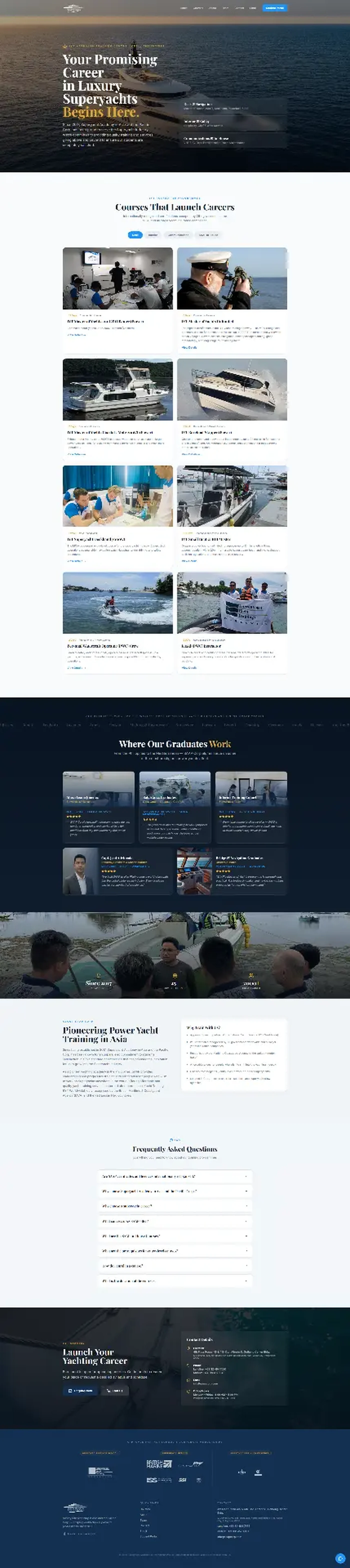
Offer-led homepage, a card grid for programmes, proof placed before the ask, and a single clear conversion action per section. Hover to scroll the full page.
What changes, and why
These are the design decisions behind the redesign. Performance figures are not shown here — they are published only once SAAP Corp confirms them from their own analytics after launch.
Enquiry path
BeforeVisitors had to read through long pages, then find an email address or a contact form at the bottom to ask about availability.
AfterA booking flow on the page the visitor is already reading — pick the programme, pick a date, send the request in one screen.
Page structure
BeforeInformation-led layout: text blocks first, offer and next step buried below the fold.
AfterOffer-led layout: what it is, who it's for, price signal and CTA above the fold, detail underneath for the visitors who want it.
Mobile experience
BeforeDesktop-first pages that reflowed into long scrolls with small tap targets on phones.
AfterMobile-first components, sticky enquiry button and forms sized for thumbs — most traffic in this market is mobile.
Search structure
BeforeOne or two broad pages covering everything, competing with each other for the same terms.
AfterA page per programme and per intent, internally linked, with metadata and structured data per page.
What gets handed over
Design system
- UX/UI design system — type scale, colour tokens, component library
- Mobile-first page templates for programme and landing pages
- Accessible form and button patterns
- Reusable proof and testimonial blocks
Booking & conversion
- Integrated booking flow with programme and date selection
- Enquiry-to-booking handoff with email notifications
- CRO layout and copy structure per landing page
- Analytics events on every step of the booking flow
Search & handover
- Page-per-intent site structure with internal linking
- Metadata, canonical tags and structured data
- Performance budget for image-heavy pages
- Editor training and documented handover
How the project runs
Four phases from audit to launch. The final phase is where measurement starts — nothing is reported before go-live.
Audit & discovery
We reviewed the existing site, the enquiry path and the questions prospects actually ask, then agreed the pages and the single conversion action per page.
- Current-site UX and content audit
- Enquiry-path mapping
- Page and intent map
- Baseline analytics setup
Page map and conversion goals agreed.
What we will report
A baseline is captured before launch, then these four numbers are reported monthly from SAAP Corp's own analytics and booking data.
Booking enquiries
Enquiries started and completed through the booking flow each month.
Enquiry-to-booking rate
Share of enquiries that convert into a confirmed booking.
Mobile conversion rate
Conversion on phones specifically, where most of the traffic sits.
Organic sessions
Non-paid sessions landing on programme and offer pages.
SAAP Corp project FAQ
Is the SAAP Corp site live?
Not yet. The redesign and booking system are in development and the public site has not launched. This page documents the scope and the concepts, not launch results.
Why are there no performance metrics on this page?
We only publish outcome numbers a client has confirmed from their own analytics or booking exports, with the source and the period. SAAP Corp has not launched, so there is no post-launch data to report yet.
What is being delivered?
A full website redesign: a UX/UI design system, mobile-first page templates, a conversion-focused layout and copy structure, an integrated booking flow, and the search structure and metadata to support it.
How long does a redesign like this take?
Four phases — audit and discovery, UX/UI design, build and booking integration, then launch and measurement. Typical range for a project of this size is eight to twelve weeks depending on content readiness.
What will you measure after launch?
Booking enquiries started and completed, enquiry-to-booking rate, mobile conversion rate, and organic sessions to the programme pages — against the baseline captured before launch.
Can I get the same build for my own charter or school business?
Yes. The same design system and booking flow underpin our sailing school and charter booking builds. Start with the project questionnaire and we will map the pages and timeline to your business.
Want a redesign like this?
Tell us about your booking flow, your programmes and your goals — we'll map the pages, the timeline and the numbers we would measure.