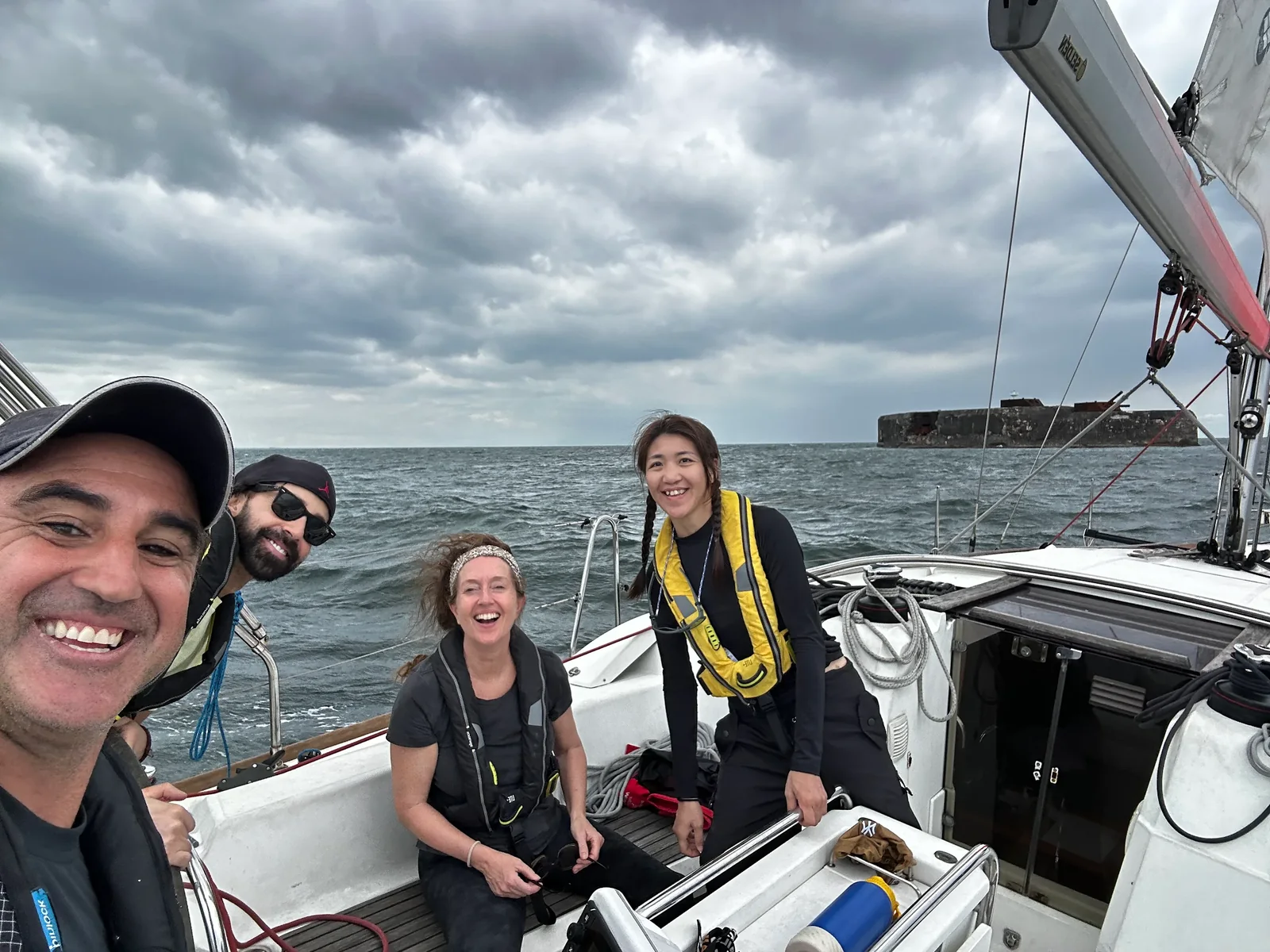
Dress for two temperatures, not one
Boarding usually happens in the warmest, stillest part of the evening. Once the boat is moving, apparent wind plus spray and falling air temperature make the same outfit feel far cooler — especially on the way back in the dark.
The reliable answer is layers you can carry: breathable shorts or light trousers, a T-shirt or rash guard, and a light windproof or fleece layer in a small bag. Cotton hoodies hold damp and stay cold, so a technical or wind-resistant outer layer is worth more than a heavy one.
- Base: quick-drying T-shirt, rash guard, or long-sleeve sun top
- Mid: light fleece or sweater for the return leg
- Outer: packable windproof shell in case of spray or a squall
- Bottoms: shorts, swim shorts, or light trousers that dry fast
Footwear is the one thing you cannot improvise
Decks get wet and hardware sits at ankle height. Flat, non-marking soles with grip — deck shoes, trainers, or secured sport sandals — keep you steady when the boat heels. Heels, smooth-soled dress shoes, and loose flip-flops are the usual causes of a bad evening.
Many boats are shoes-off below deck or barefoot-friendly on a clean deck, so bring something easy to slip off and stow.
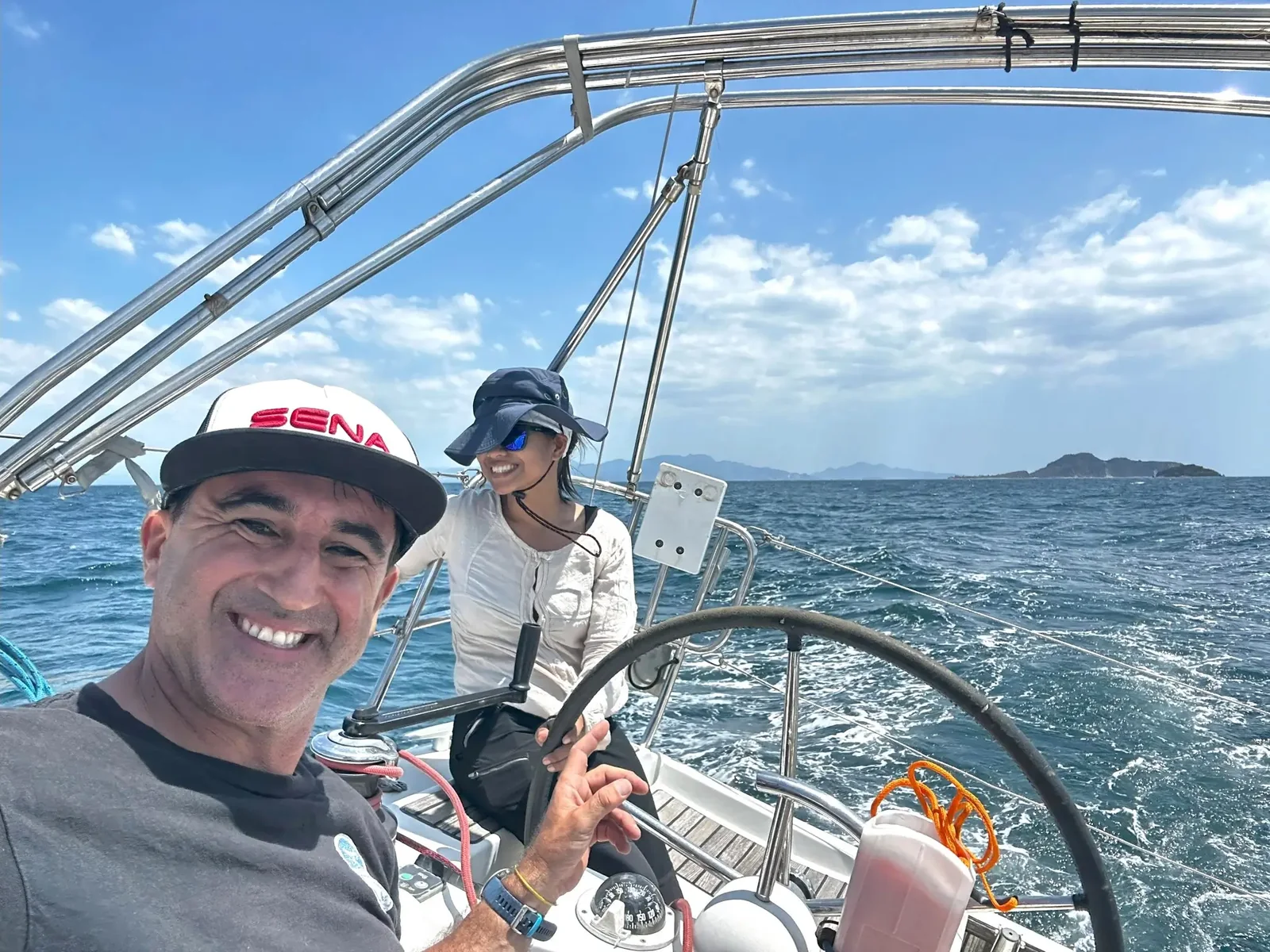
Sun and wind protection before the sun drops
There is still an hour or more of strong low-angle sun on most sunset trips, reflected off the water from below. A hat with a retention cord, polarised sunglasses with a strap, and reef-safe sunscreen applied before boarding cover the exposure without needing a bag full of gear.
Low light also means bugs near shore in some cruising grounds, so a small repellent and a lightweight long-sleeve top are sensible in sheltered bays and river moorings.
What to leave ashore
Space is limited and anything loose can end up over the side. Hard-shell suitcases, wide-brim hats with no cord, umbrellas, and jewellery you would hate to lose all belong in the car or the hotel safe. A soft bag that squashes into a locker is the right luggage.
- Soft bag instead of a rigid case or backpack frame
- Phone in a waterproof pouch or dry bag
- Light jacket packed, not tied around a rail
- Motion-sickness tablets taken ashore, before boarding, if you are prone
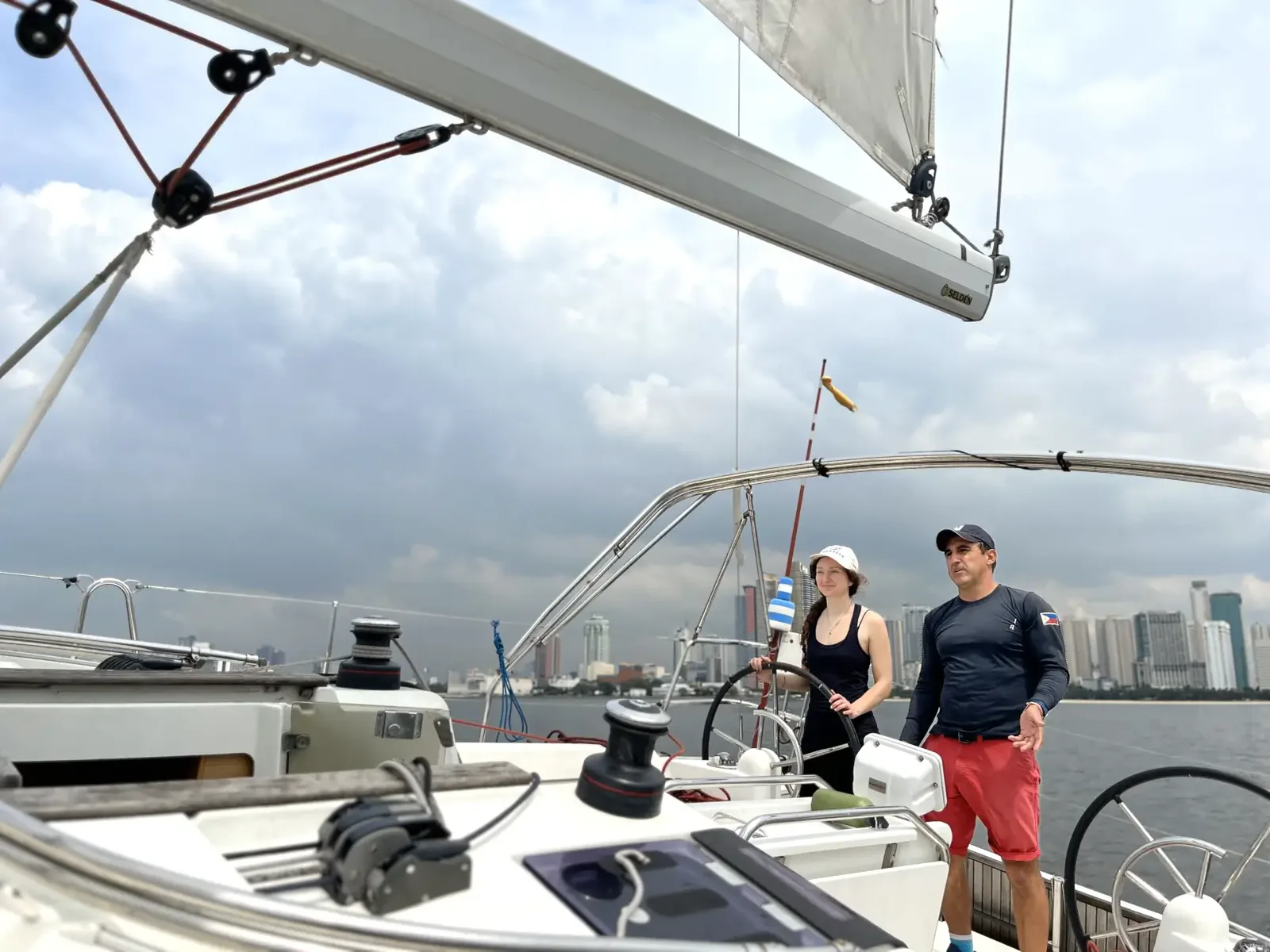
Operators: publish this on the booking page, not in the confirmation email
"What should I wear?" is one of the most common pre-booking questions in day-sail and sunset-charter enquiries. Answering it on the trip page removes hesitation at the exact moment someone is deciding whether to book, and it reduces inbox volume for your crew.
Practically, that means a short what-to-bring block on each trip page, the same content available on mobile without expanding three accordions, and a booking flow that reflects it — for example a note on whether jackets are provided or whether the boat is shoes-off.
Layer up, wear flat grippy shoes, protect against low sun, and pack soft — then, if you run the boat, say exactly that on the booking page where it converts.
Selling sunset sails online?
We build charter booking sites where trip pages answer what-to-wear, availability, and price in one scroll — then take the booking without an email thread.
See our yacht charter booking website service